Posts

World Hand Hygiene Day Quiz

Image
πŸ“£  International healthcare workers all around the world!  πŸ“£ 🎈 Fancy a 5-min break? May 5 is World Hand Hygiene Day and we took the occasion to celebrate YOU, healthcare workers all around the world by creating an entertaining and playful short quiz on hand hygiene. Thank you for your tireless work during this pandemic!  😷 Test your hand hygiene knowledge and get your free "COVID-19 Best Practice Hand Hygiene Training" webinar by filling the quiz here   πŸ‘‰  https://bit.ly/handhygieneday_quiz
Protect yourself against the new coronavirus

Image
Coronavirus. Source Wit et al., 2016. This outbreak started at the end of December 2019 in Vuhan City, China. The virus quickly analyzed, and was found to be different from any previously known human viruses. It was identified as a coronavirus, and named 2019-nCoV ( n ovel co rona v irus). The new strain is closely related to the viruses that cause common cold, SARS or MERS. The most common typical symptoms are fever, cough and breathing difficulties [ 1 ]. There is quite limited information about the new strain, but it is quite well documented what we should do to generally avoid respiratory virus infections. World Health Organization (WHO) published advices for the public on how to reduce the risk of coronavirus infection [ 2 ]: Clean your hands frequently; Proper cough and sneeze hygiene; Social distancing (avoid contacting other people when you are sick, or at risk of acquiring the virus); If you have symptoms, seek medical care early; In coronavirus-infected a...

Costs Related to Electronic Compliance Monitoring Systems

Image
What are these costs ? Previously we summarized what types of  Electronic Compliance Monitoring System exist , and described how  ECM systems are used in the real clinical settings . Now, we are further investigating what costs are associated with these systems.

Electronic Compliance Monitoring Systems in Real Hospital Environment

Image
Actual clinical settings where ECM systems were applied In our previous posts, we summarized what types of  Electronic Compliance Monitoring (ECM) Systems exist , and showed their strengths and weaknesses. Now we show some actual clinical settings where ECM systems were applied.

Electronic Compliance Monitoring Systems

Image
Summary of the different concepts of ECMS In our previous posts, we demonstrated that  direct observation of hand hygiene is labor-intensive, time-consuming and expensive . Electronic compliance monitoring systems (ECMS) can eliminate the shortcomings of the direct observation. Now, we summarize the different concepts of ECMS.

Flu and Hand Hygiene

Image
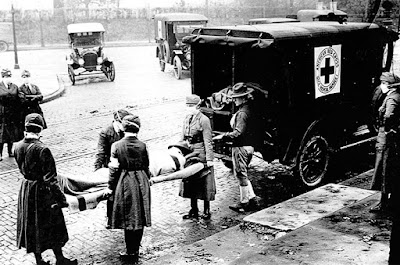
One hundred years ago, in 1918, an influenza pandemic broke out. The so-called Spanish flu killed  20-50 million  people, many more than the First Ward War that ended the same year  [1] . Could it happen again? What can we do to avoid it? What is the role of hand hygiene in this story?

How to compare handrub techniques?

Image
Many techniques exist how to handrub, most of them are based on the so-calles WHO 6-step protocol . As we previously summarized , this has limitations; it takes long to perform, quite hard to remember and therefore its compliance is pretty low. For these reasons, several alternative protocols exist , but we have limited data on the efficacy of these alternatives.

Microbiological Validation of the Fluorescent Trial

Image
In our previous posts, we described  what the fluorescent method  is , and  where should it be applied . But is the fluorescent method validated microbiologically? How can we know that the shining areas are really disinfected? Now, we discuss it.

Disinfectant resistant superbugs?

Image
A couple days ago, a new scientific study was published , about Enterococcus bacteria with increased alcohol tolerance. One day later, Reuters quoted it using a bit more shocking title; „ Superbugs now also becoming resistant to alcohol disinfectants ”. It really sounds terrific. How bad it really is?

European-Wide Infection Control Training and Certification: How Far Is It?

Image
Preventing healthcare-associated infections is a responsibility of everyone in a hospital. Still, infection prevention and control activities need to be organized by competent experts  [1] . Many reports claim a shortage of qualified infection control doctors and nurses  [2] . What does “qualified” actually means?

Why We Need the Further Improvement of Current Standards?

Image
Last time, we wrote about the  two most important standards for testing the efficacy of handrubs ; the European CEN  EN 1500   and the American  ASTM E-1174 . Now we summarize the main weaknesses of these standards.

Effect of regular monitoring and feedback

Image
Hand hygiene with alcohol-based hand rub is considered to be the most efficient tool to prevent the spread of nosocomial infections. In addition to compliance – performing hand hygiene at appropriate frequency – the efficacy of hand hygiene technique has key importance.

How Do We Compare Handrubs?

Image
Handrubs may have very  different composition . There are several standards that can help us to compare the effectiveness of any products. The two most commonly used standard procedures are the  EN 1500  standard (developed by CEN, the  European Committee for Standardization ) and the ASTM E-1174 standard (by the  FDA ’s Tentative Final Monograph – TFM)  [1] .

Hand hygiene quality improvement by the Semmelweis Scanner

Image
Hand hygiene (HH) is believed to be the most efficient tool in fighting hospital-acquired infections. Despite years of effort, caregivers’ HH compliance remain low. In this study we investigated how the Semmelweis Scanner can result HH quality improvement through automated training.

Where Should the Fluorescence Method Be Applied?

Image
In our  previous post , we described what the fluorescent method is, and how to apply it to examine hand hygiene technique. Now, we will present some of the good practices, settings, where the fluorescent method should be applied. At the Medical Faculty of the University of Debrecen (Hungary), the fluorescent method was applied to test the effectiveness of surgical hand rub technique. In the 2013/2014 academic year, 285 third-year medical students were involved in a survey; surgical and rubbing technique were investigated twice with the fluorescence method during the semester. The most common insufficiently disinfected areas were thumbs and fingertips. The number of students with unsatisfactory surgical hand disinfection was significantly lower in the second survey. Identifying students who failed to perform provided the tutor the opportunity to pay special care and attention to those, and help them to correct their technique  [1] . At the Medical Faculty of the Technical...

Fluorescent Hand Hygiene Control

Image
What is the fluorescent trial and how can we apply it? For testing one’s hand hygiene, the two most commonly used methods are the  microbiological sampling  and the fluorescent dying method. In this post, we discuss the fluorescent method in details. The fluorescent method was developed to assess the hand hygiene technique. Health-care workers should perform handrubbing as they usually do, the only difference is that the handrub contains a fluorescent dye. After the hand hygiene event, hands should be placed under (harmless) UV-A light. Regions of hand surface treated with proper amount of fluorescent handrub glow, where untreated areas remain dark. Figure 1:  Images of a hand recorded in visible light (A) and in UV light (B) during the fluorescent method. ( Source:  HandInScan) The phenomenon of fluorescence occurs when a substance (the dye) absorbs light (energy) and instantly reemits light at a longer wavelength. In this special case, the absorbed light...

What Do Alcoholic Handrubs Contain?

Image
Alcoholic handrubs are the primarily recommended hand hygiene tools according to all large professional organizations. (ABHR = Alcohol-based handrub, according to the WHO terminology.) These contain alcohol as active ingredient;  ethanol ,  propan-1-ol ,  propan-2-ol  or the combination of these. These three alcohols have several alternative names, some may sound more familiar: the alternative names are listed in  Figure 1 , along with their chemical structures. Figure 1 : Structure of ethanol, propan-1-ol and propan-2-ol (using the official IUPAC names). Drawings were made by  molwiev.org . The antimicrobial activity of alcohols derives from their ability to denature proteins. According to the WHO, alcohol solutions containing 60–80% alcohol are the most effective  [1] . CDC claims that the most effective concentration range is between 60 and 95%   [2] . Higher concentrations are less potent, because proteins are not denatured easily in...